Determinate or indeterminate: matching the support to the plant
Bush tomatoes stop at a set height; vines keep climbing until frost. How to read the plant tag and pick a cage, ladder, stake or weave to match each type.
The plant tag usually tells you most of what you need to choose a support. Somewhere on it, often in small print, is a letter or a word: D, IND, determinate, indeterminate, or sometimes "bush" and "vining". That one detail decides how tall the plant will get and how long it keeps growing, and so which frame it needs.
Determinate tomatoes: bush types that stop
A determinate plant grows to a set height, usually around 3 to 4 ft, then sets flowers at the tips of its stems and stops getting taller. Most of its fruit ripens over a few weeks. Many paste tomatoes, a lot of early varieties and most "patio" types are determinate.
Because the plant stops at a known size, a fixed support works well. A sturdy cage holds the stems from all sides, and you rarely need to tie anything. A short ladder does the same job and stores flatter. A single stake also works, but you will be tying a bushy plant to one point, which takes more string and more time.
Don't prune the side shoots on a determinate plant. They carry much of the crop, and removing them leaves you with fewer trusses.
Indeterminate tomatoes: vines that keep climbing
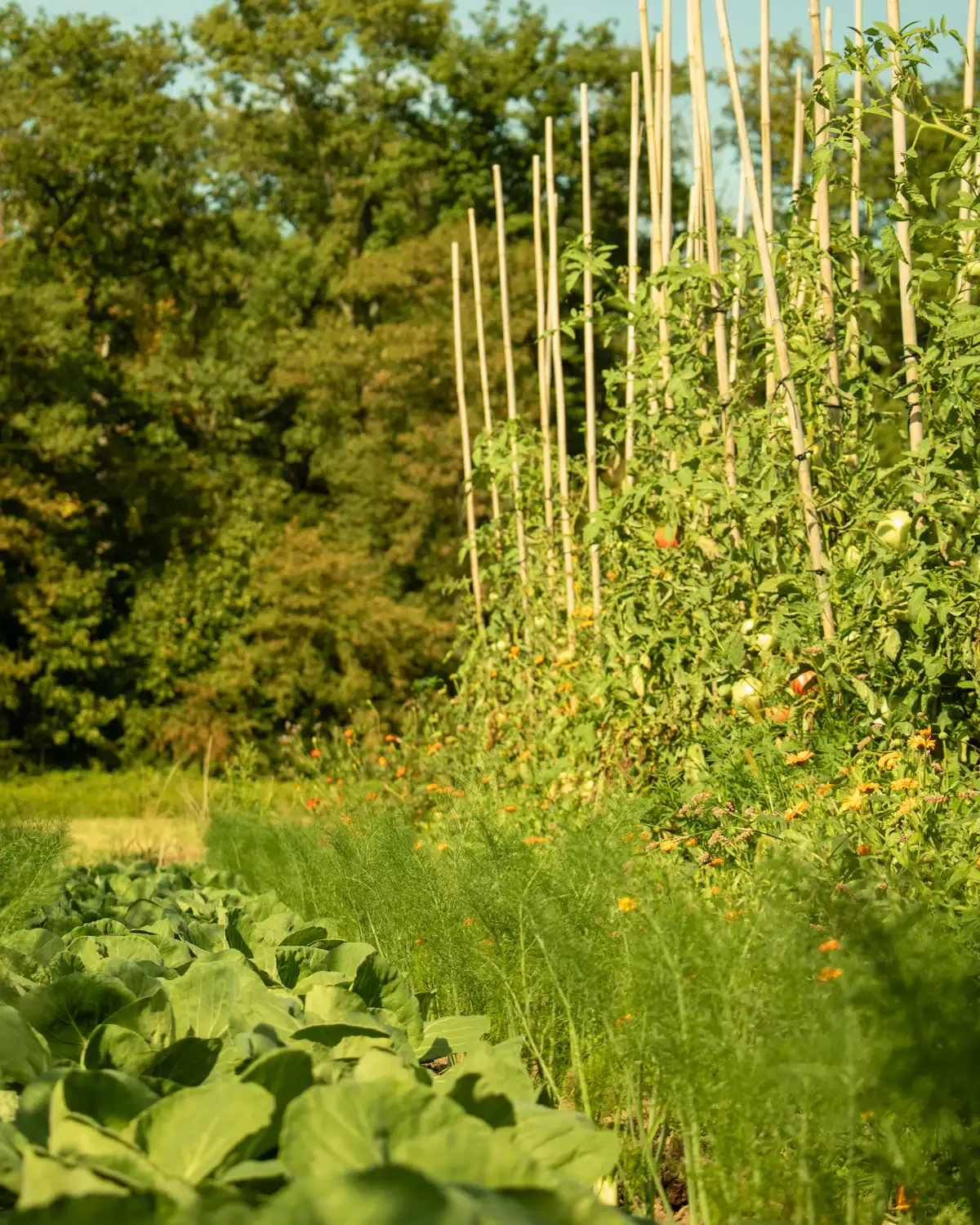
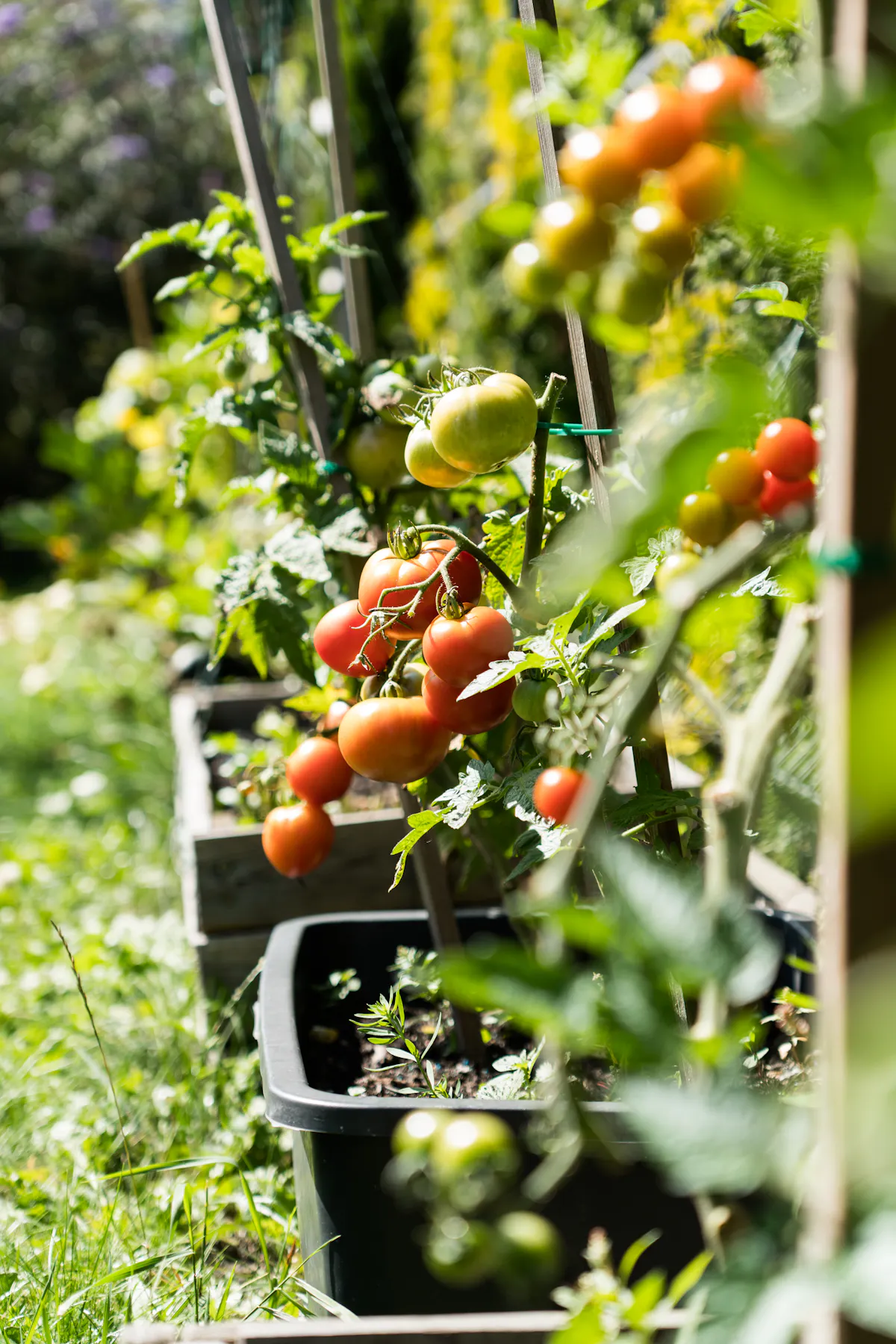
An indeterminate plant keeps producing new stem, leaves and flower clusters until frost or disease stops it. In a long summer it can pass 6 ft and still be adding growth at the top. Most beefsteaks, most heirlooms and nearly all cherry tomatoes grow this way.
These plants need height from the start, and they need a support that can take weight late in the season, when the lower trusses are full and the top is still growing. Good choices are:
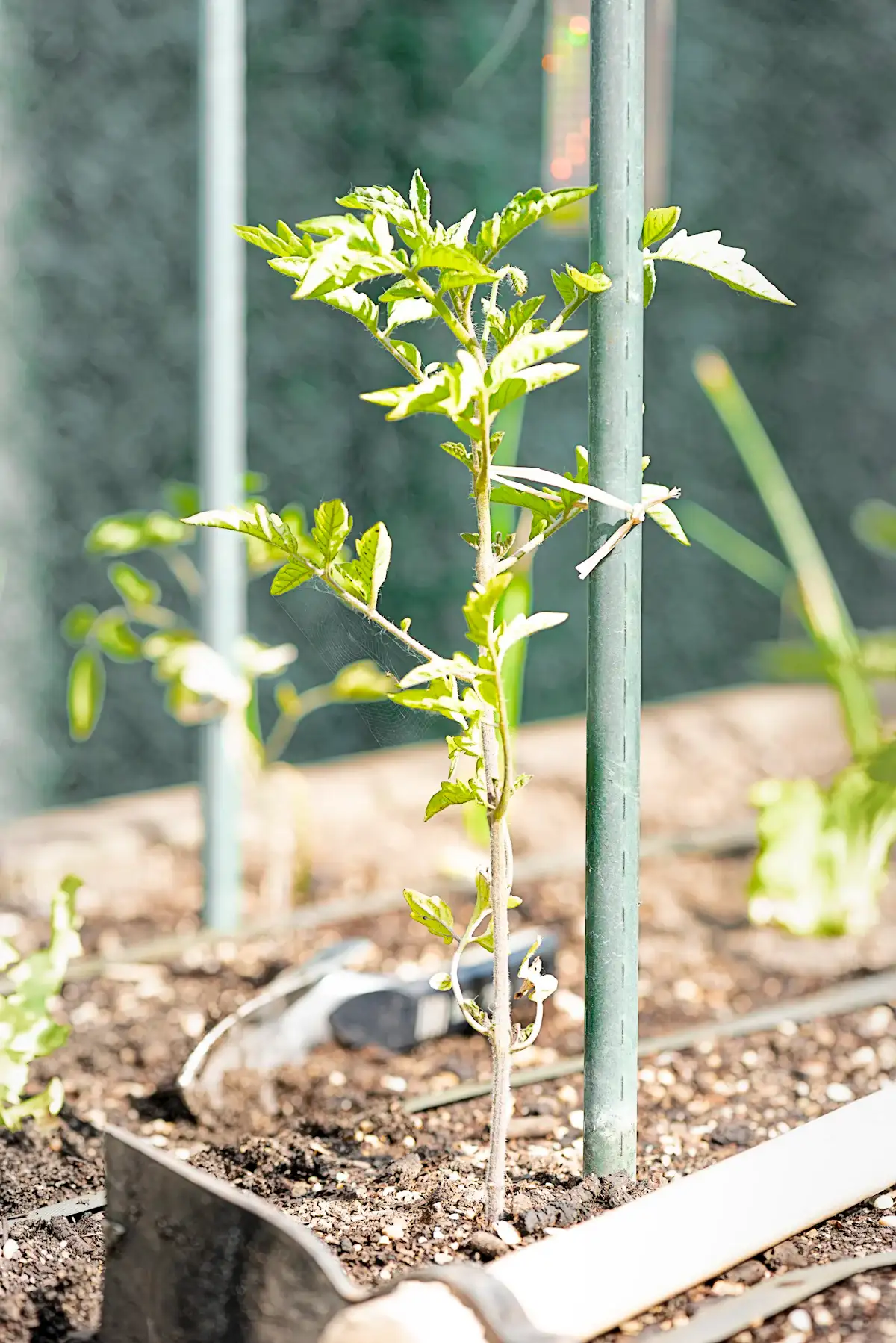
- A tall stake, 7 to 8 ft long, with the plant pruned to one or two main stems.
- A stackable ladder, where you add sections as the plant climbs.
- A string or weave system along a row, if you grow several plants together.
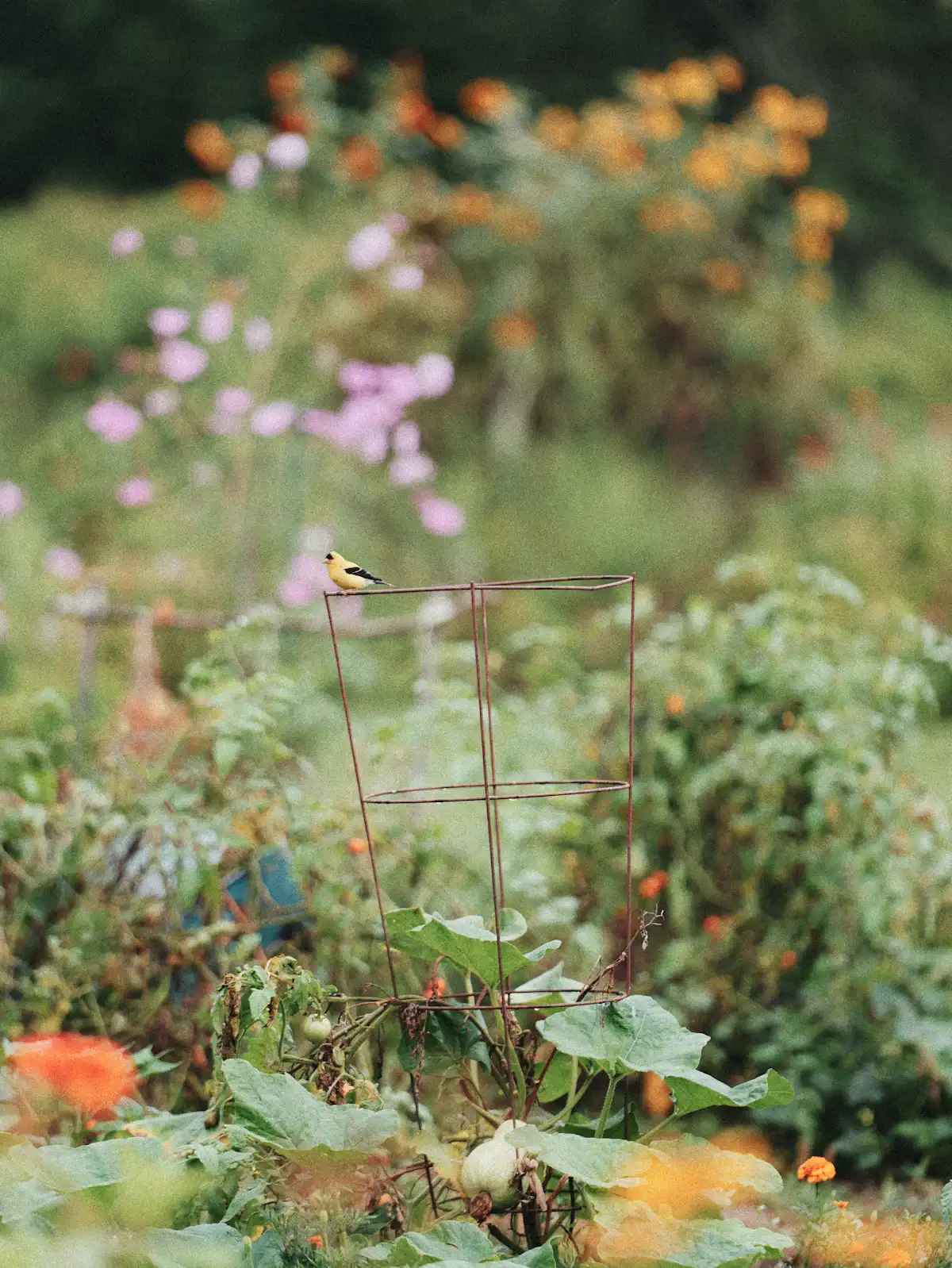
The common mistake is putting a vining tomato in a short cone cage. By midsummer the stems flop over the top ring and bend down the outside, and the whole thing can tip once the fruit sets.
Semi-determinate and dwarf types
Some varieties sit in between. Semi-determinate plants grow taller than bush types, often 4 to 5 ft, but they do stop. A medium ladder or a tall, heavy cage suits them. Dwarf indeterminates keep growing all season but put on stem slowly and stay short, so a 4 ft stake or a small ladder is often enough.
If the label is missing
Saved seed and swapped seedlings often come without a tag. Look up the variety name if you know it. If you don't, watch the plant for a few weeks after planting: a determinate plant usually looks compact, with leaves set close together, while a vine has longer gaps between leaves and a growing tip that keeps running. If you are unsure, give it the taller support. A vine in a short cage is a problem; a bush plant on a tall stake is only a bit of wasted stake.
Where to go next
Once you know what you're growing, the next questions are when to put the support in and, for vines on a stake, how to tie and prune them. Gardener's Supply is one of several retailers that sells ladders and stakes in different heights if you need new frames.